THE FRIENDS OF
St Peter’s Church, Windrush
PRESERVING OUR HISTORIC VILLAGE CHURCH
THE FRIENDS OF
PRESERVING OUR HISTORIC VILLAGE CHURCH
Windursh is a small Cotswold village about mid-way between Oxford to the east and Cheltenham to the west. It sits on a slope above the river Windrush which rises higher up in the Cotswolds and joins the river Thames south of Witney.
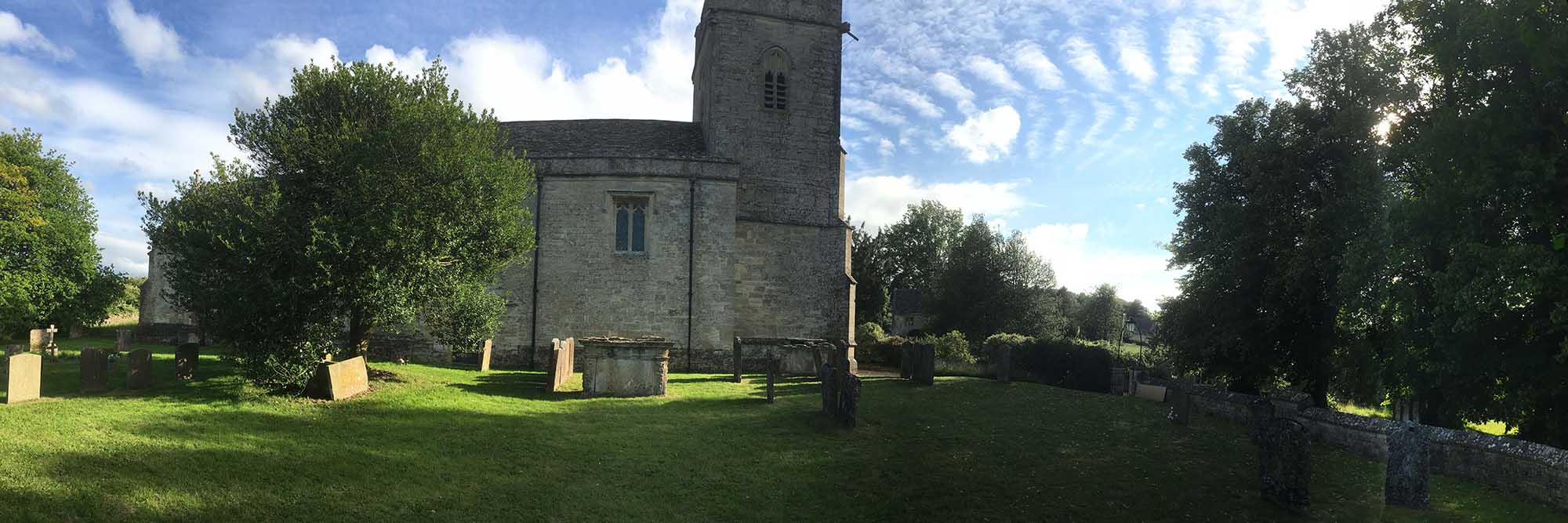
Our Grade I-listed medieval church is a prominent feature in the village, situated beside the small triangular village green with its six mature lime trees.
The Friends of St Peter’s is a local charity dedicated to raising funds to support the care and repair of this Grade I-listed historic Cotswold church. The Friends of St Peters is charity recognised by HM Revenue and Customs. It is governed by a board of trustees who are long-standing residents of the village of Windrush.
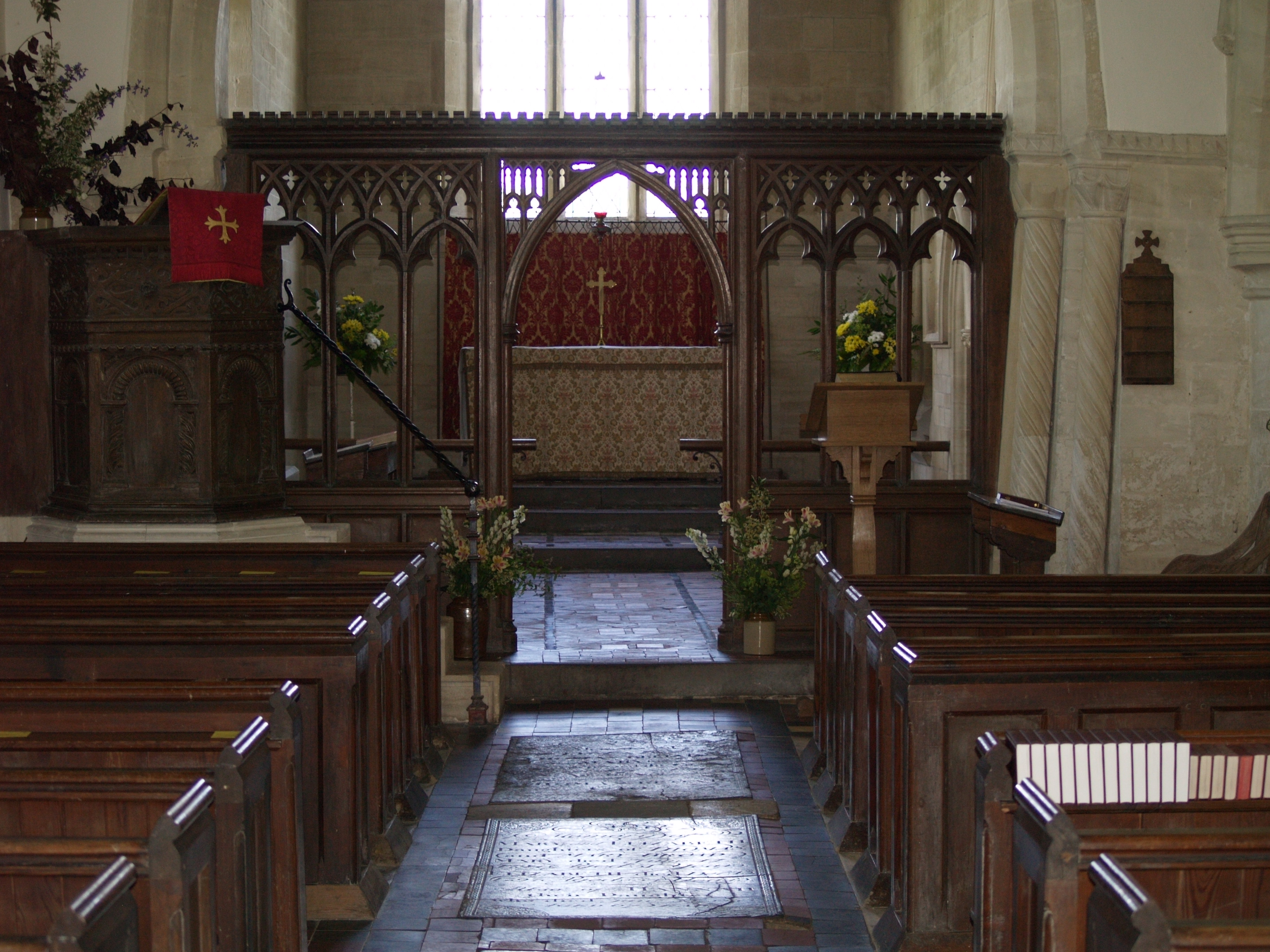
St Peter’s is a medieval church built in Cotswold stone which was quarried in the village. Such is the quality of the stone that the Windrush quarries were among those considered for supplying stone for the rebuilding of the Houses of Parliament in the mid-nineteenth century.
St Peter’s dates from the 12th century, and the Norman features from this period are south doorway and the sides of the chancel arch. Both are richly carved and decorated in the style of the period, the south doorway with its beakheads that run arpund the arch. The chancel was rebuilt in the 14th century, whgich is when its roof timbers date from, like those of the wouth transept, known locally as the 'farmers' aisle'.
The tower is later medieval (15th century) and originally had a door on he west end facing the village green. It was blocked up when the church was restored in the 1870s by the Victorian arhchitect Henry Woodyer of Guildford. He made the Norman south dorr the prinicpal entrance. The vestry and organ space were built at the same time, and the chancel was lengthened.
The pulpit is Jacobean, moved and reset in the 19th century, the 19th-century chancel screen is of oak from Riga in the Baltic, nd the font is late medieval.
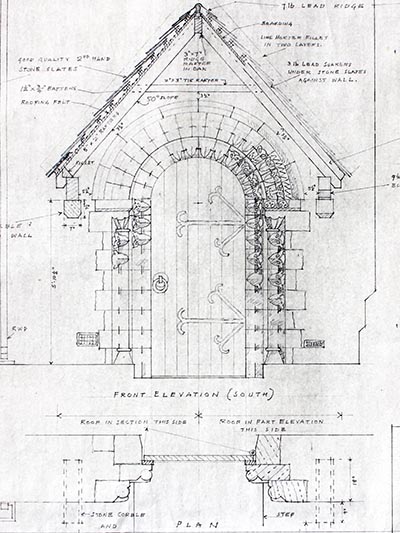
Norman south door
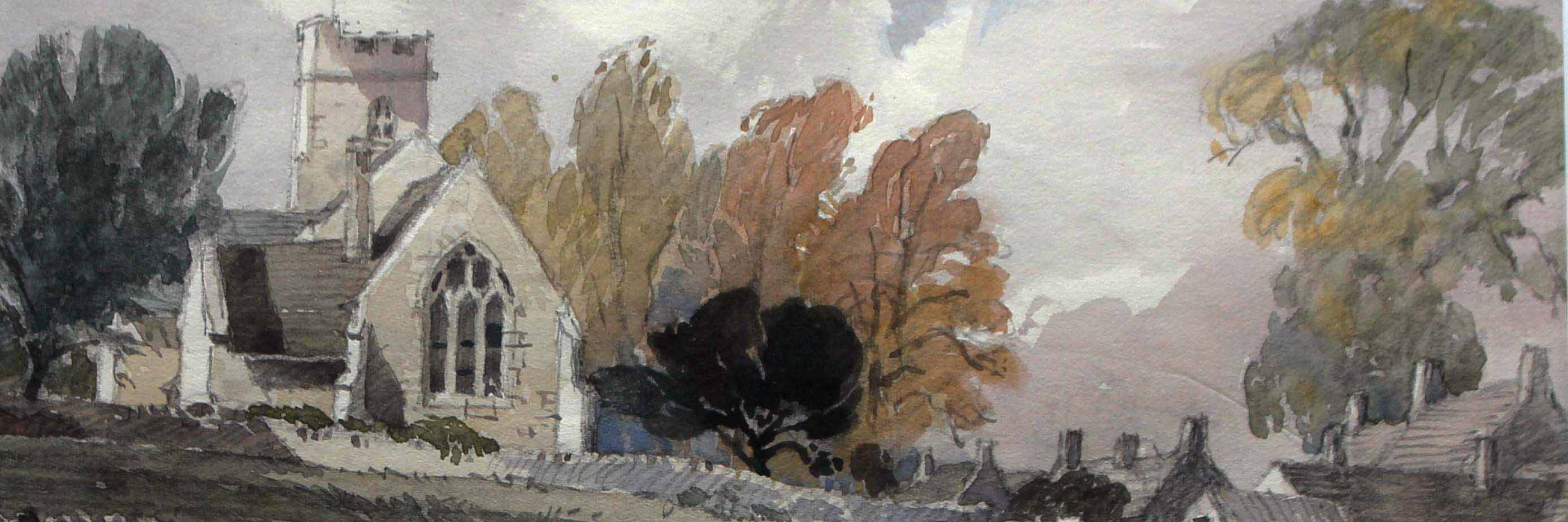
from an architetural drawing by James Fletcher-Watson
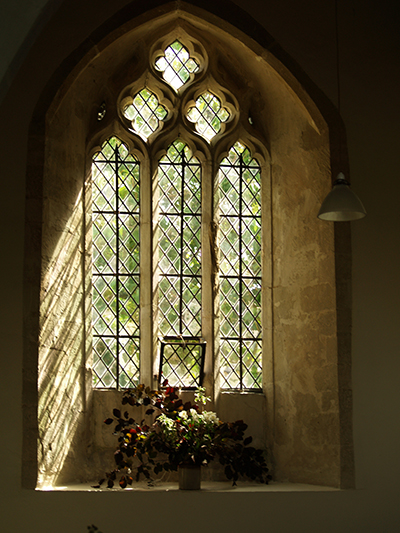
South transept window
A window of the Gothic Decorated style of the 14th century
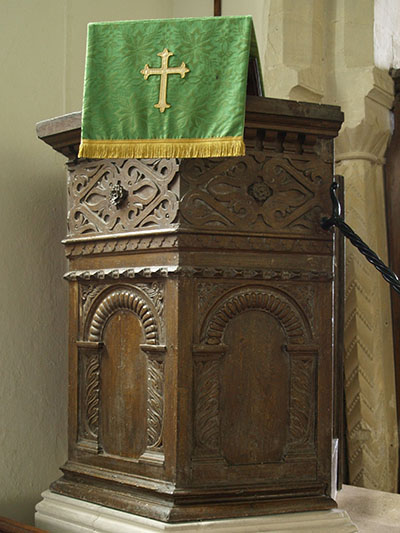
The pulpit
A beautiful 17th-century panelled and carved pulpit
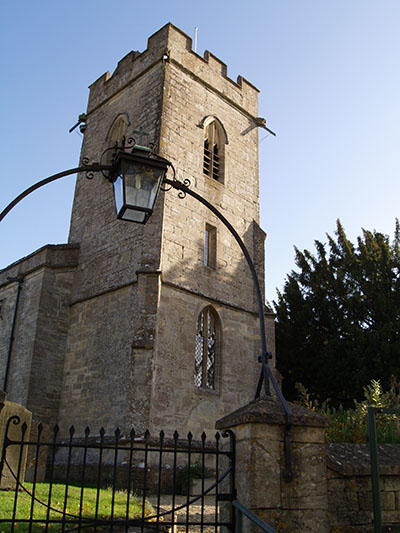
Church tower
from the church path and the green
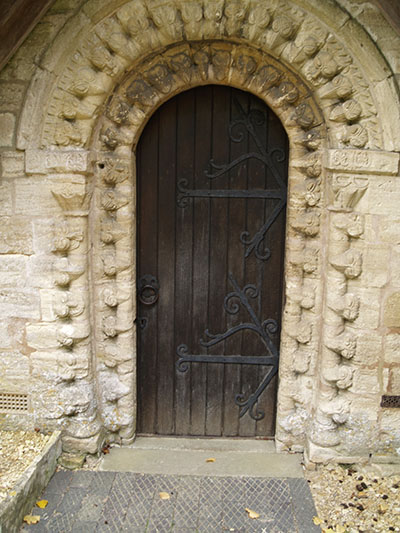
Norman south door
with traditional beakhead design
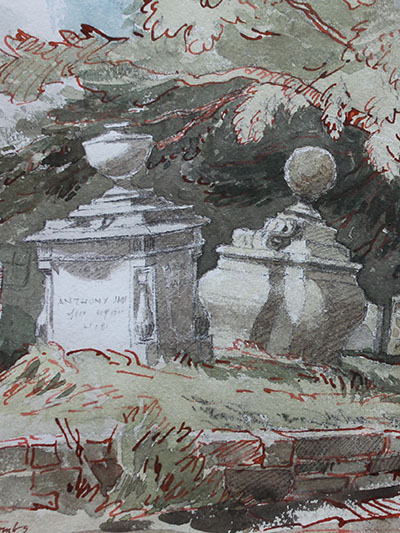
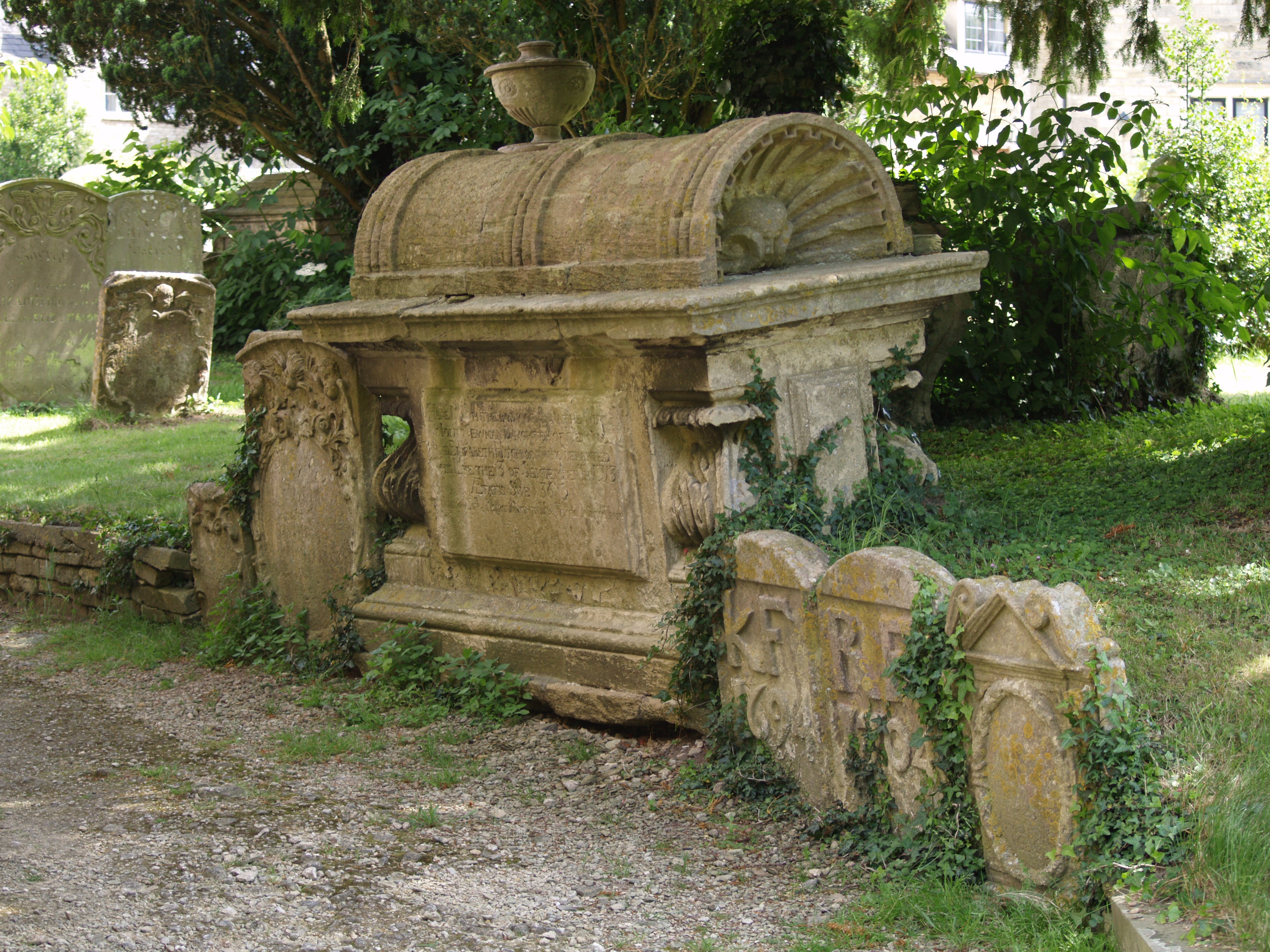
18th century tombs
from an architetural drawing by James Fletcher-Watson
Ancient churches are expensive to maintain and the purpose of the Friends is to raise money to save and maintain our church. Every donation little or large is gratefully received.
Our objective is to build up funds to contribute to future works to the church.
Through special arrangements with the Church of England's 'Parish Buying' scheme the finance charge is 1.95% on each transaction. So almost all your donation comes to the Friends. When you click on the 'Give to St Peter's' button, it will take you to our 'Give a Little' donations page.